
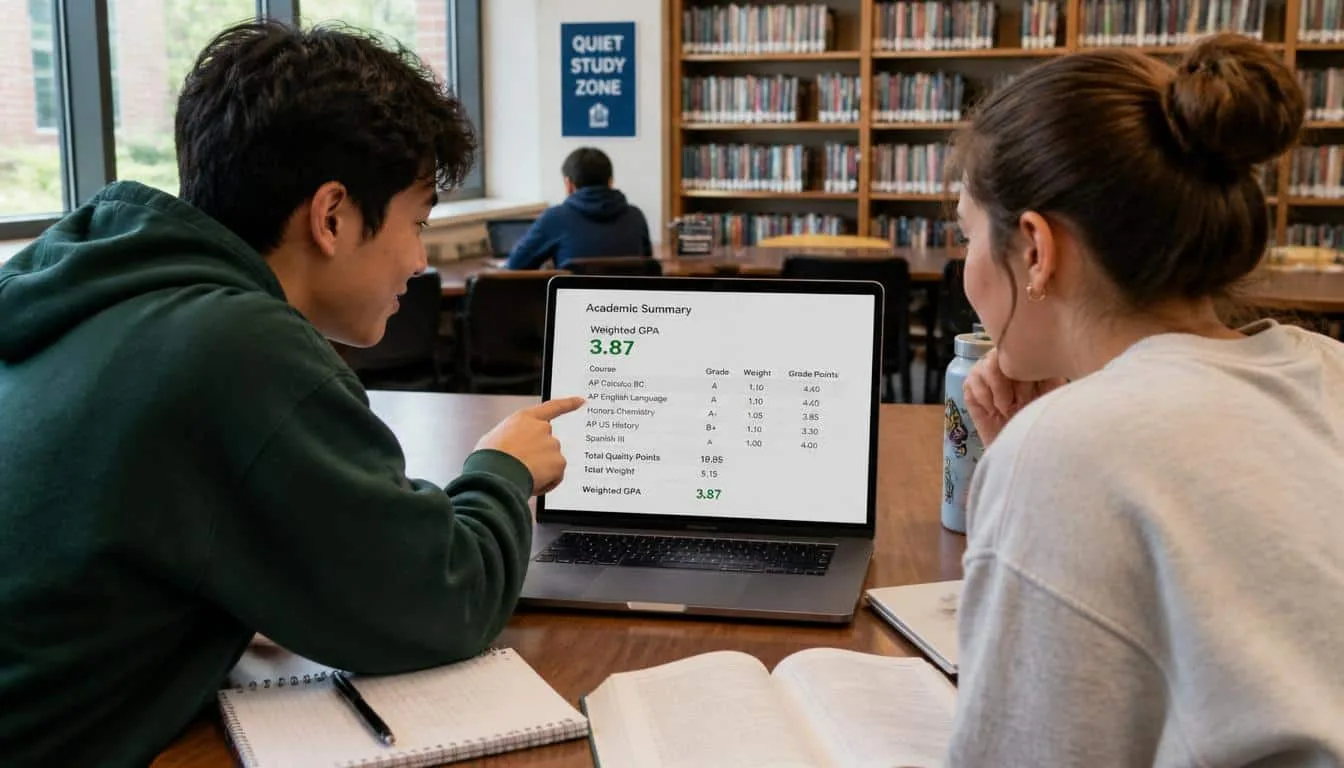
Weighted GPA Explained: What It Means, How It Works, and How to Improve Yours
So you've heard the term weighted GPA thrown around in school hallways, college applications, and maybe a few anxious family dinner conversations. But what does it actually mean? And more importantly, does it really matter?
Let's break it all down in plain English.
What Is GPA Weighting?
GPA stands for Grade Point Average. It's a number, usually between 0.0 and 4.0, that summarizes your academic performance. But not all GPAs are created equal.
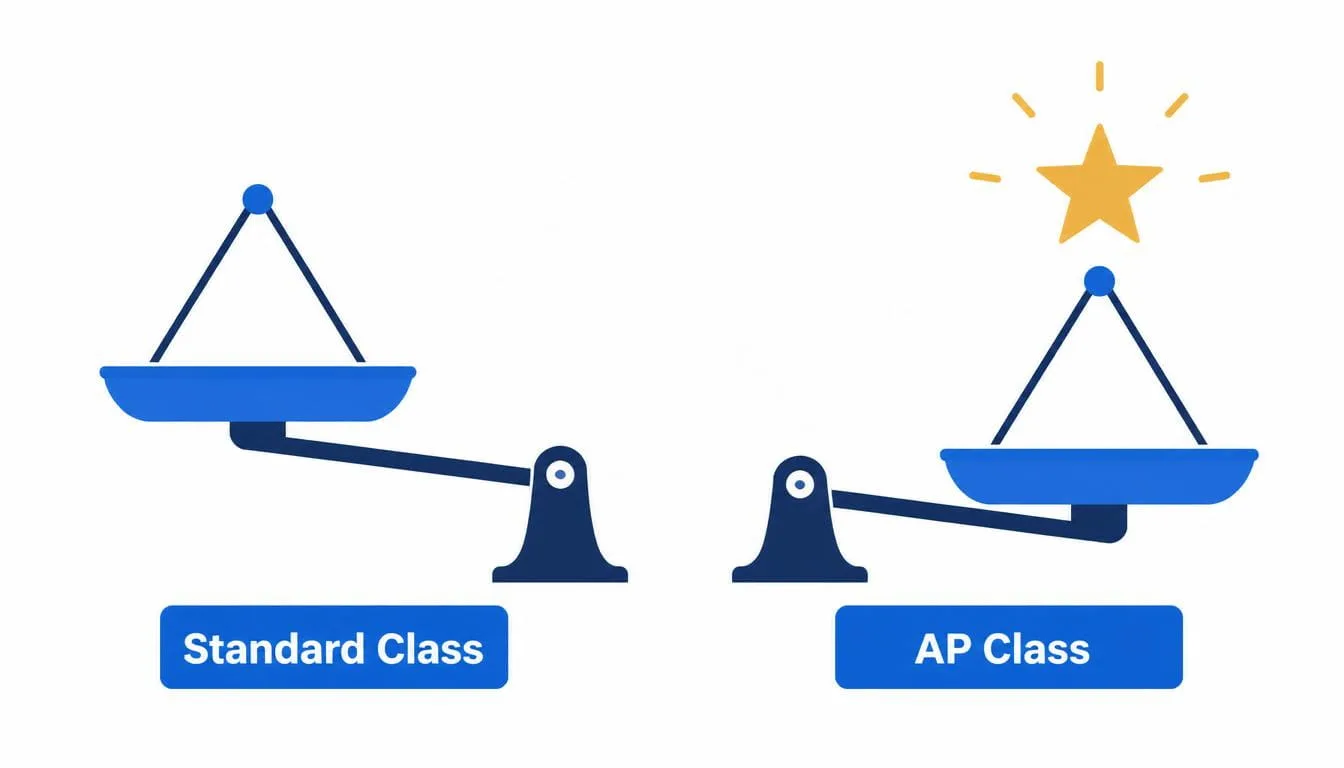
GPA weighting is a system that assigns extra value to harder, more challenging courses. The idea is simple: if you're taking an Advanced Placement (AP) Biology class instead of regular Biology, you're doing more work. A weighted GPA reflects that effort.
Think of it like this, running a 5K is great, but running one with a backpack full of textbooks deserves a little more credit. That's the logic behind weighting.
According to the College Board, students who take AP courses are better prepared for college-level work, which is one reason schools started treating these grades differently (College Board, 2023).
Weighted GPA vs. Unweighted GPA: What's the Difference?
This is where most students get confused. Here's a clean breakdown:
Unweighted GPA uses a standard 0.0–4.0 scale. Every class is treated the same, whether it's AP Calculus or Introduction to Art. An A always equals 4.0.
Weighted GPA uses a scale that goes up to 5.0 (sometimes 4.5). Harder courses, like AP, IB (International Baccalaureate), or Honors classes, receive bonus points. So an A in AP Calculus might equal 5.0, while an A in a standard class still equals 4.0.
Here's a quick comparison:
|
Grade |
Unweighted GPA |
Weighted GPA (AP/IB) |
|
A (90–100) |
4.0 |
5.0 |
|
B (80–89) |
3.0 |
4.0 |
|
C (70–79) |
2.0 |
3.0 |
The key difference? Weighted GPA rewards you for taking on academic challenges. Unweighted GPA just looks at the raw grade.
What Does a Weighted GPA Tell You (and Admissions Officers)?
A weighted GPA tells a story about both your grades and your course choices.
A student with a 3.8 weighted GPA who took six AP classes is telling a very different story than a student with a 3.8 unweighted GPA in standard courses. Both numbers look similar on paper. The context is what matters.
For college admissions, a weighted GPA communicates:
• Academic ambition — Did you challenge yourself?
• Course rigor — Did you take harder classes when you had the option?
• Consistency — Did you perform well even in difficult subjects?
According to the National Association for College Admission Counseling (NACAC), the most important factor in college admissions decisions is grades in college-prep courses, not just the GPA number alone (NACAC, 2022). So the combination of a strong weighted GPA and challenging courses is what truly stands out.
That said, colleges don't look at weighted GPA in isolation. They often recalculate GPAs using their own internal methods to compare students fairly across different school systems.
How to Calculate Weighted GPA
Calculating a weighted GPA is easier than it sounds. Here's the step-by-step process:
Step 1: Assign Grade Points
Use the weighted scale based on your course type:
• Standard course: A = 4.0, B = 3.0, C = 2.0, D = 1.0
• Honors course: Add 0.5 points (A = 4.5, B = 3.5, etc.)
• AP or IB course: Add 1.0 point (A = 5.0, B = 4.0, etc.)
Step 2: Multiply by Credit Hours
Each class typically carries 1 credit. Multiply the grade points by the credits for that class.
Step 3: Add It All Up and Divide
Add all the weighted grade points together. Then divide by the total number of credits.
Example:
|
Course |
Grade |
Type |
Weighted Points |
|
AP English |
A |
AP |
5.0 |
|
Honors Math |
B |
Honors |
3.5 |
|
Regular History |
A |
Standard |
4.0 |
|
AP Chemistry |
B |
AP |
4.0 |
Total weighted points: 5.0 + 3.5 + 4.0 + 4.0 = 16.5
Total credits: 4
Weighted GPA = 16.5 ÷ 4 = 4.125
Not too complicated, right? Most school counseling systems (like Naviance or your school's student portal) calculate this automatically, but knowing the math helps you plan ahead.
Strategies to Improve Your Weighted GPA
Here's the good news: your weighted GPA is not locked in. There are real, practical ways to bring it up, and no, "study harder" isn't the only answer.
1. Take More Weighted Courses Strategically
Not all AP or Honors courses are equally demanding. Talk to your school counselor about which ones align with your strengths. Taking AP Art History when you genuinely love the subject is smarter than loading up on five AP sciences just to chase points.
2. Don't Sacrifice Grades for Rigor
A B in AP English beats an A in a standard class for your weighted GPA, but only slightly. If you're pulling a C or D in an AP class, it may actually hurt your weighted GPA more than a regular course would. Balance ambition with performance.
3. Focus on Consistency Early
Junior year grades carry enormous weight in college applications. But freshman and sophomore year grades still factor into your cumulative weighted GPA. Start strong, stay consistent.
4. Retake Classes When Possible
Some schools allow students to retake courses to replace a lower grade. Check your school's policy, it can make a real difference in your cumulative average.
5. Use Academic Support Resources
Tutoring, office hours, and study groups aren't signs of weakness, they're signs of strategy. Students who use available resources consistently perform better in challenging courses, according to a study published by the Journal of Educational Psychology (Zimmerman & Schunk, 2011).
6. Talk to Your Guidance Counselor
Your counselor knows your school's specific weighting system and which courses are available to you. A 30-minute conversation can help you map out a smart, realistic academic plan.
FAQs About Weighted GPA
Q: Is a 4.5 weighted GPA good?
Yes, a 4.5 weighted GPA is excellent. It typically means you're earning mostly A's in advanced courses. Many selective colleges see weighted GPAs between 4.0 and 5.0 from their admitted students.
Q: Do all colleges consider weighted GPA?
Not always. Many colleges, including highly selective ones like MIT and the University of California system, recalculate applicants' GPAs using their own formula. They don't simply accept the number on your transcript at face value.
Q: Does my weighted GPA appear on my transcript?
It depends on your school. Some schools report both weighted and unweighted GPAs. Others report only one. Ask your counselor which version goes to colleges.
Q: Can a weighted GPA go above 4.0?
Yes. Because weighted GPAs use a 5.0 scale for advanced courses, it's entirely possible to have a weighted GPA above 4.0, even above 4.5, if you're consistently earning high grades in AP or IB classes.
Q: What's more important — weighted or unweighted GPA?
Both matter. Colleges use the weighted GPA to understand your academic ambition. They use the unweighted GPA to get a cleaner picture of your pure grade performance. Neither tells the full story on its own.
Final Thoughts
Your weighted GPA is more than just a number, it's a reflection of the academic risks you were willing to take and how well you handled them. It rewards students who push themselves, and it gives colleges a fuller picture of your potential.
That said, don't obsess over perfecting it at the expense of your health, sleep, or sanity. A genuine, well-rounded academic record, with strong grades in courses you actually challenged yourself with, will serve you far better than a hollow perfect number.
Play the long game. Choose your challenges wisely. And remember: a weighted GPA is just one chapter of a much bigger story.