

Do Your Final Grades Determine Your Success?
A Complete Guide to Understanding, Calculating, and Contextualizing Final Grades
Every student has felt that stomach-drop moment when final grade season arrives. Suddenly, everything you did, or didn't do, over the past semester feels like it is about to be summed up in one cold, unforgiving letter. But here is a fair question worth asking: do your final grades actually determine your success in life?
The short answer is: it depends. And the long answer is what this article is here for.
We will cover what final grades really mean, how to calculate them step by step, what factors affect them, and whether that B+ or C- is going to follow you around for the rest of your career. Spoiler: it probably will not, but that does not mean grades do not matter at all.
What Are Final Grades? (And Why Do They Exist?)
A final grade is the cumulative score a student receives at the end of an academic term. It reflects their performance across all graded components , tests, assignments, participation, and usually a final exam.
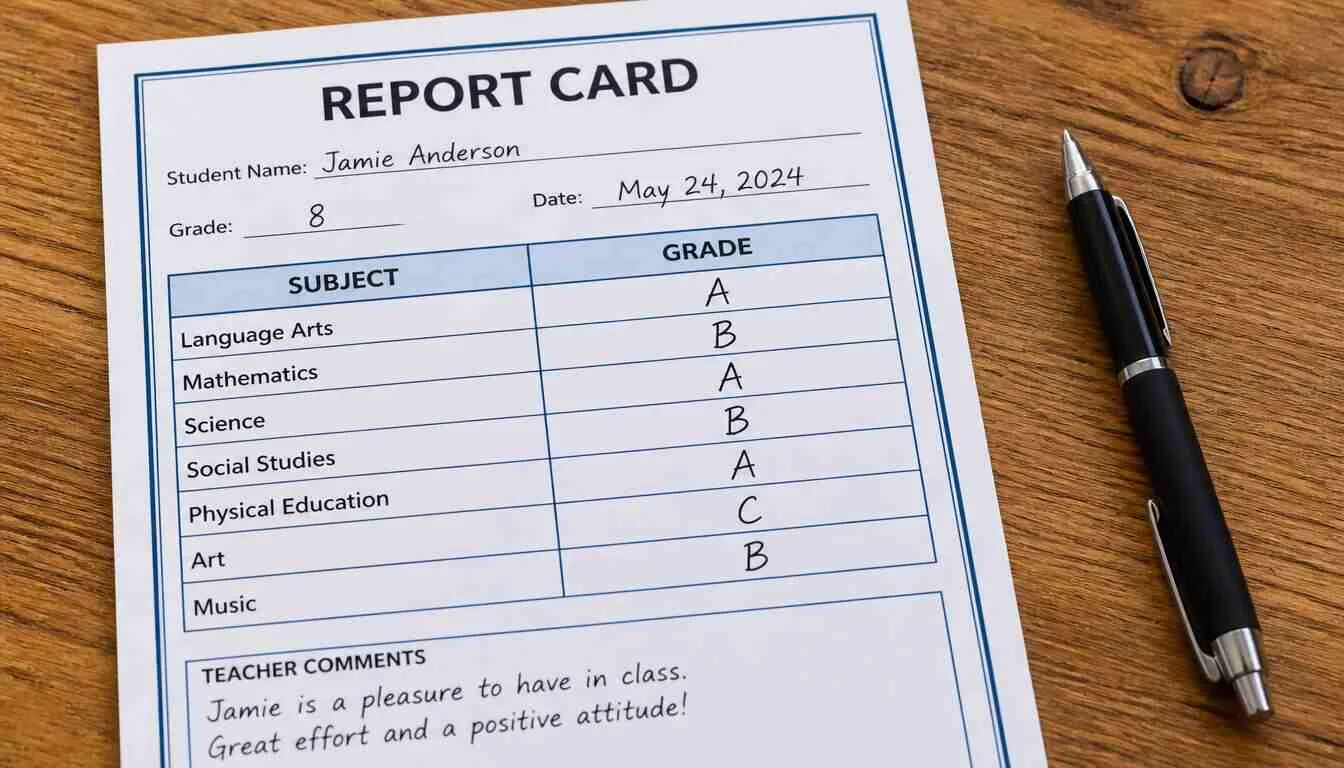
According to the National Center for Education Statistics (NCES), grading systems in the United States typically follow a letter-based scale (A through F), though point-based and percentage systems are also widely used across institutions.
Final grades exist for a clear reason: they give teachers, institutions, employers, and students themselves a standardized snapshot of academic performance. Think of it as your report card to the world, not your whole story, just the chapter that fits neatly into a box.
Does Your Final Grade Determine Your Success?
This is the question most students actually want answered. And the honest answer is: final grades matter, but they are not the whole picture.
Here is what the research actually says:
• A 2019 study published in the Journal of Educational Psychology found that academic performance does predict early career outcomes, but the effect weakens significantly over time.
• According to a LinkedIn Workforce Report, soft skills like communication, problem-solving, and adaptability rank higher than GPA in hiring decisions for most mid-to-senior level roles.
• Google famously removed GPA from its hiring criteria for most positions after internal research showed no correlation between grades and job performance.
That said, final grades still carry real weight in specific scenarios, especially early in your academic and professional journey.
They matter most when applying to universities, graduate schools, or competitive professional programs. A strong GPA can open the first door. But what you do after that door opens? That is on you.
What Is Meant by Final Grades?
Final grades are more than just a letter or number. They represent a student's overall performance across an entire course and usually appear on an official transcript.
Here is how most grading scales break down:
|
Letter Grade |
Percentage Range |
GPA Points |
Meaning |
|
A |
90–100% |
4.0 |
Excellent |
|
B |
80–89% |
3.0 |
Above Average |
|
C |
70–79% |
2.0 |
Average |
|
D |
60–69% |
1.0 |
Below Average |
|
F |
Below 60% |
0.0 |
Failing |
Some schools also use plus/minus variations (A+, B-, etc.), which can slightly adjust GPA values. Always check your institution's specific grading policy, they are not all the same.
Step-by-Step Guide: How to Calculate Final Grades
Calculating your final grade is not magic. It is just math, and not even scary math. Here is how to do it properly.
Step 1: Find Your Course Syllabus
Every course assigns different weights to different components. Your syllabus will list exactly how much each piece counts toward your final grade. This is your roadmap.
A typical breakdown might look like this:
• Homework Assignments: 20%
• Quizzes: 10%
• Midterm Exam: 25%
• Class Participation: 10%
• Final Exam: 35%
Step 2: Gather All Your Scores
Collect your actual scores for each category. If your homework average is 88%, your quiz average is 75%, and so on, write them all down. You cannot calculate what you cannot see.
Step 3: Multiply Each Score by Its Weight
This is the key step. Multiply each category score by its percentage weight (expressed as a decimal).
Example:
• Homework: 88 x 0.20 = 17.6
• Quizzes: 75 x 0.10 = 7.5
• Midterm: 82 x 0.25 = 20.5
• Participation: 90 x 0.10 = 9.0
• Final Exam: 79 x 0.35 = 27.65
Step 4: Add All the Weighted Scores Together
Add up all the numbers from Step 3:
17.6 + 7.5 + 20.5 + 9.0 + 27.65 = 82.25
Your final grade is 82.25% — that is a solid B. Not bad at all.
Step 5: Convert to a Letter Grade or GPA
Use your school's official grading scale to convert that percentage into a letter grade or GPA value. Refer to the table in the previous section.
Factors Affecting Your Final Grades
Understanding how final grades are calculated is one thing. Understanding what actually influences them is another. Here are the main factors, some in your control, and some that deserve more honest conversation.
1. Attendance and Engagement
Research from the Journal of College Student Retention consistently shows a strong positive correlation between class attendance and academic performance. Simply showing up matters, not just physically, but mentally.
2. Study Habits and Time Management
A 2013 study from UCLA found that students who prioritized sleep and consistent study schedules over cramming performed significantly better on exams. Your brain is not a sponge you can squeeze all at once.
3. Assignment Completion and Consistency
Many students underestimate how much small assignments contribute to final grades. A missed homework here and a skipped quiz there can quietly drag an A down to a B, or worse.
4. Test Performance
Final exams often carry the highest weight in a course. A strong performance can rescue a shaky semester. A poor one can undo months of effort. That is just how high-stakes assessments work.
5. Mental Health and Personal Circumstances
This one does not get discussed enough. According to the American Psychological Association, stress, anxiety, and depression are among the leading factors affecting student performance. Life happens. And grades do not always reflect what a student is capable of when circumstances are difficult.
6. Instructor Grading Style
Not all professors grade the same way. Some use curve adjustments. Others have strict rubrics. Understanding how your specific instructor grades can help you tailor your effort more strategically.
7. Access to Resources
Students who have access to tutoring, quiet study spaces, and good internet connectivity consistently outperform those without. This is a systemic issue, not a personal failing.
FAQs About Final Grades
Can I raise my final grade after the semester ends?
In most cases, no. Once final grades are submitted and the grading period closes, they are typically locked. However, some schools allow grade appeals if there was a calculation error or extenuating circumstances. Always check your institution's academic policy.
How much can the final exam change my grade?
Significantly, if it carries a high weight. If your final exam counts for 40% of your grade and you are sitting at a 70%, a score of 95% on the final could push you into B territory. Use a weighted average calculator to run the numbers before exam day.
Does a bad final grade affect my GPA permanently?
Yes, in the sense that it is on your transcript. However, many schools allow grade forgiveness or academic renewal policies, where you can retake a course and have the new grade replace or average the old one. Check with your academic advisor.
Do employers actually check final grades?
Entry-level employers sometimes ask for transcripts or GPA, especially in competitive industries like finance, law, or medicine. But for most jobs and especially after a few years of work experience, your grades become far less relevant than your skills and portfolio.
What is a passing final grade?
Most institutions set the minimum passing grade at 60% (D) for general courses, though many graduate programs require a C or above to earn credit. Some technical or professional courses may require a B minimum. Always verify with your department.
Personal Opinion: What Final Grades Really Tell You
Here is an honest take: final grades are a useful tool, but a terrible identity.
They measure how well you performed within a specific system, under specific conditions, during a specific window of time. They do not measure your creativity, your resilience, your emotional intelligence, or your ability to solve real-world problems.
That said, treating grades as completely unimportant is also a bit naive. Strong grades show that you can follow through, meet deadlines, and master structured material. Those are real skills. The problem comes when we conflate a grade with a person's worth or potential.
The most successful people I have observed, in business, in creative fields, in academia itself,are not necessarily the ones who got straight A's. They are the ones who stayed curious, kept learning, and treated failure as information rather than a verdict.
So yes, work for your grades. Take them seriously. But do not let them convince you that you are your GPA.
Final Thoughts
Final grades matter, in specific contexts, at specific times. They open or close certain doors, especially early in your academic journey. But they are not destiny.
Understanding how to calculate them, what factors affect them, and how to interpret them puts you in a much stronger position, not just as a student, but as someone making smart decisions about your own future.
Know the system. Work within it strategically. And remember that your transcript is one page in a much longer story you are still writing.